Why China Top Knife Gate Valves Handle Slurries and Solids?

Time:2026-09-11 Author:Charlotte
0%

Handling slurry is not like handling clean water. The fluid may carry sand, ore, ash, fibers, or thick mineral particles. These materials can settle, scrape surfaces, and block narrow flow paths. That is why many engineers ask, “why do knife gate valves work best with slurries and solids”?

A knife gate valve uses a thin, sharp-edged gate to cut through suspended solids. Its open passage can reduce material buildup around the closure area. In mining plants, operators may see dark abrasive slurry moving through large pipes. A properly selected valve can isolate that line without forcing solids through a small opening. Resilient seats, hardened gates, and corrosion-resistant bodies may extend service life. However, these features are not automatically suitable for every process.

China’s leading valve manufacturers combine casting, machining, assembly, and pressure testing within controlled production systems. Experienced suppliers usually provide material certificates, dimensional records, and test reports. They may also support customized bore sizes, pneumatic actuators, and wear-resistant linings. Relevant inspection practices can include shell testing, seat testing, and leakage verification under recognized industrial procedures. The exact standard should match the application.

Origin alone proves nothing.

A reliable selection depends on pressure, temperature, particle size, concentration, and cycling frequency. I have seen valves fail early when users ignored settling solids or chose soft materials for abrasive service. That weakness deserves attention. Buyers should compare test evidence, maintenance access, replacement parts, and field references. The best China top knife gate valve is not simply the cheapest option. It is the valve whose design, materials, and documented performance fit the actual slurry duty.
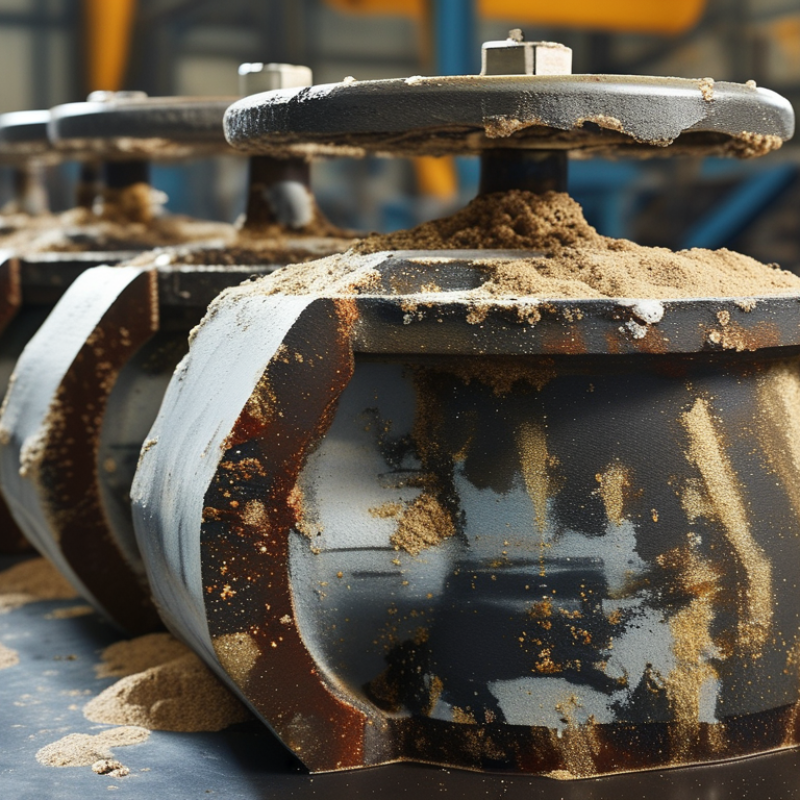
Why China Top Knife Gate Valves Handle Slurries and Solids?

What Are Knife Gate Valves and Why Are They Used for Slurries?

A knife gate valve uses a thin, sharpened gate to open or close the flow path. Unlike a standard globe valve, it creates little obstruction when fully open. This simple design suits pipelines carrying thick slurries, fibrous mixtures, and suspended solids. The gate moves vertically through the medium. It can cut through settled material that might block other valve types.

Slurries often contain water mixed with sand, mineral particles, ash, or process waste. These mixtures can be abrasive and difficult to control. A knife gate valve provides a relatively straight passage, reducing areas where solids can collect. Its resilient seat can also help limit leakage when the valve closes. Field experience shows that performance depends heavily on particle size, concentration, pressure, and flow speed. The valve is not magic. Excessive abrasion can still damage the gate, seat, or packing.

Proper selection requires more than matching pipe diameter. Engineers should check slurry density, operating temperature, pressure, and the expected number of cycles. A valve that works well in a low-pressure discharge line may struggle in a high-pressure pipeline. That assumption can fail. During inspections, operators should watch for slow closing, external leakage, unusual vibration, and worn sealing surfaces. Flushing the body may help in some services, but it can worsen erosion in others. Maintenance decisions should follow actual operating evidence, not only a catalog rating.

How Do China Top Knife Gate Valves Manage Abrasive Solids?

China top knife gate valves manage abrasive solids by combining a straight-through body with a sharpened, hardened gate. The gate slices through slurry instead of forcing solids around a narrow plug. This matters in mining, wastewater, and mineral processing. The USGS Mineral Commodity Summaries 2024 reports about 2.5 billion metric tons of global iron ore production in 2023. Such volumes create demanding duties for isolation valves.

Field practice shows three details matter most. A resilient seat helps seal against irregular particles, while replaceable wear components protect the body from erosion. A bottom-cleaning design can reduce sediment buildup beneath the gate. Pneumatic or hydraulic actuators also need enough thrust to overcome packed solids. Not always easy.

The Minerals Council of Australia has reported that tailings commonly contain substantial water and finely ground rock, creating both abrasion and settling risks. For this reason, operators should check particle size, solids concentration, velocity, temperature, and cycling frequency before selection. Hard-facing can extend gate life, but it cannot correct an undersized actuator. Poor flushing still causes trouble. Leakage testing should follow applicable industry procedures, such as API 598 where relevant, while installation should keep the valve aligned and fully supported. In practice, the best-performing China-made designs are not judged by price alone. They are judged by seat life, torque stability, inspection access, and documented material certificates. Nakne details? The overlooked weakness is maintenance access. If operators cannot replace seats quickly, downtime becomes the real cost.

Which Design Features Improve Flow Control and Sealing Performance?

Knife gate valves manage slurries and solids through a simple, forceful design. A thin gate moves across the flow path, cutting through suspended particles instead of trapping them. Full-port openings reduce turbulence and help prevent buildup near the body. This matters in mining, wastewater, and mineral processing lines.

Sealing performance depends on more than a tight seat. Resilient elastomer seats can absorb small particles and maintain contact during cycling. Metal seats tolerate heat, abrasion, and sharp solids more effectively. Some designs use replaceable seat rings, making field maintenance faster. The gate guides also deserve attention. Poor alignment increases friction and can damage the packing.

A reliable valve needs suitable actuation. Pneumatic or electric actuators must provide enough force when solids settle at the bottom. Stem protection limits contamination around the packing area. Flush ports can remove accumulated slurry, but they require correct placement and controlled pressure. Otherwise, cleaning may disturb the seal.

In practice, no valve design fits every slurry. Particle size, concentration, temperature, and pressure change performance. That assumption can fail. I would check cycle tests with the actual medium before specifying materials. Engineers should also inspect leakage rates after repeated operation, not only during factory testing. Small details often decide whether flow control remains stable in a harsh pipeline.

Why Knife Gate Valves Handle Slurries and Solids

Relative engineering impact of common design features on flow control and sealing performance

The index uses a 1–5 engineering scale to illustrate how each feature typically contributes in abrasive slurry and solids-handling service. Full-port openings reduce flow restriction, while resilient seats, replaceable wear components, and self-cleaning gate movement help maintain sealing reliability.

How Are Materials and Actuators Selected for Slurry Applications?

Selecting materials starts with the slurry, not the catalog. Particles may be angular, hot, acidic, or chemically unstable. The USGS Mineral Commodity Summaries 2024 recorded about 22 million metric tons of global copper mine output in 2023. That scale makes valve wear a production issue. For abrasive service, engineers compare ductile iron bodies, stainless steel gates, duplex alloys, and hardened edges. Elastomers must match pH and temperature. EPDM suits many water-based slurries. PTFE tolerates broader chemical exposure, but cold flow may weaken sealing. Fine particles can invade packing. They often do.

Actuator selection requires more than nominal valve diameter. Engineers should calculate differential pressure, solids concentration, packing friction, cycle frequency, and breakaway force. Double-acting pneumatic actuators provide useful control during frequent cycling. Spring-return units can support a defined fail position. Electric actuators suit sites without reliable instrument air, but their torque margins need careful review. Oversizing wastes energy. Undersizing causes stoppage. Neither is acceptable. Position feedback and torque protection also help prevent hidden gate damage.

The IEA Global Critical Minerals Outlook 2024 identifies copper supply growth as an important challenge for electrification. More mineral processing can mean harsher slurry duty. Chinese valve manufacturing can perform well when material certificates, hardness records, weld procedures, and ISO 5208 pressure tests are traceable. A clean selection spreadsheet can still miss flushing conditions or sediment buildup. That is where field inspection matters. No selection is perfect. Engineers should revise assumptions after observing actual leakage, stroke time, and actuator air consumption.

Why China Top Knife Gate Valves Handle Slurries and Solids? - How Are Materials and Actuators Selected for Slurry Applications?

Selection Dimension Typical Slurry Condition Recommended Valve Design or Material Why It Matters
Valve Construction Fibrous, abrasive or settling media containing suspended solids Full-port knife gate valve with a straight-through body passage The thin gate cuts through solids and reduces the risk of blockage compared with many conventional multi-turn valve designs.
Solids Concentration Approximately 5–70% by mass, depending on mineral, pulp or process duty Use a slurry-rated body, reinforced gate and suitable seat arrangement; confirm pressure drop and torque using actual slurry data Higher solids loading increases friction, settling tendency and actuator demand.
Particle Size Fine particles up to coarse particles; actual size distribution should be supplied by the process engineer Select the bore, gate clearance and seat geometry to prevent particle bridging or wedging Oversized particles can obstruct the port or damage sealing surfaces if the passage is undersized.
Body Material Water-based mineral slurry or mildly corrosive process liquid Ductile iron or cast carbon steel for general service; stainless steel or higher-alloy materials when corrosion requires it The body must withstand line pressure, external loads and the combined effects of corrosion and erosion.
Gate Material Abrasive slurry with repeated cycling Stainless steel gate; hardened, coated or wear-resistant gate options for severe abrasion The gate must retain its flatness and cutting ability while resisting abrasive wear.
Seat Arrangement Media requiring isolation, drainage or reduced solids accumulation Resilient elastomer seat, metal seat or unidirectional seat selected according to temperature, pressure and leakage requirements Seat selection affects shut-off performance, wear life and the valve’s ability to tolerate embedded particles.
Elastomer Selection Ambient or moderately elevated temperatures with water, chemicals or hydrocarbons EPDM for many water-based services; NBR for selected oil-containing services; FKM or PTFE-based solutions for higher chemical or temperature resistance Compatibility depends on temperature, pH, chemical concentration and exposure time; no single elastomer suits every slurry.
Stem and Packing Dusty, wet or corrosive environments with frequent operation Corrosion-resistant stem with adjustable gland packing; use protective stem covers where contamination is likely Reliable packing and stem protection help prevent leakage, corrosion and actuator overload.
Operating Temperature Common slurry services from approximately 0°C to 120°C, subject to material limits Check body, seat, packing and actuator temperature ratings together; provide heat tracing or insulation where freezing or settling is possible Temperature changes can alter viscosity, elastomer performance and the force required to operate the valve.
Pressure Rating Low- to medium-pressure slurry pipelines and process equipment Select the pressure class from the applicable design standard and the maximum differential pressure, not only the nominal pipe size Slurry pressure surges, pump shutoff pressure and static head must be included in the design review.
Manual Actuator Infrequent isolation where power or instrument air is unavailable Handwheel, chainwheel or gearbox sized for the maximum breakaway and running load Manual operation is simple and economical, but it may be slow or impractical for large valves and frequent cycling.
Pneumatic Actuator Remote isolation or automatic operation with available instrument air Double-acting cylinder for controlled opening and closing; spring-return configuration where a defined fail position is required Pneumatic actuators provide fast, repeatable operation, but air pressure, air quality and fail action must be verified.
Electric Actuator Sites without instrument air or systems requiring position feedback and centralized control Electric linear or quarter-turn drive selected for thrust, duty cycle, enclosure rating and emergency manual override Electric actuation supports integration with control systems but requires protection against moisture, dust and stall conditions.
Actuator Sizing High solids, high differential pressure or valves that may start after extended idle periods Size for the manufacturer’s maximum required thrust or torque, including packing friction, seat load, solids wedging and a project-approved safety margin Normal running load alone may not overcome the higher breakaway load caused by settled or compacted solids.
Control Function On/off isolation, emergency shutdown or occasional throttling Use knife gate valves primarily for isolation; use a purpose-designed control valve when continuous throttling is required Continuous throttling can accelerate erosion, create vibration and shorten seat and gate life.
Installation Orientation Vertical or horizontal slurry pipelines with possible solids settlement Install according to the valve design instructions; avoid arrangements that create an unvented solids pocket beneath the gate Correct orientation reduces settling, abrasion and actuator loading during restart.
Environmental Protection Outdoor, washdown, dusty or corrosive plant environments Specify suitable enclosure protection, corrosion-resistant fasteners, drain provisions and protective actuator covers External contamination can impair limit switches, packing adjustment and actuator reliability even when the wetted materials are suitable.
Inspection and Maintenance Abrasive duties with variable cycle frequency Monitor leakage, operating time, actuator load and packing condition; inspect gate and seat wear during planned shutdowns Trend monitoring can identify wear, solids buildup or actuator problems before loss of isolation occurs.
Engineering Note: The ranges and recommendations above are general selection guidance. Final valve and actuator sizing should be based on nominal size, slurry density, solids concentration, particle-size distribution, pH, temperature, flow velocity, differential pressure, cycle frequency and the applicable piping and valve standards.

What Maintenance Practices Extend Knife Gate Valve Service Life?

Knife gate valves handle slurries and solids because their thin gates cut through fibrous, abrasive media. Service life still depends on disciplined maintenance. Field technicians should flush the body after shutdown, especially when slurry can settle overnight. Check the gate edge, seats, stem, packing, and actuator connections for scoring or leakage. A small leak is not harmless. It often signals erosion, misalignment, or packing compression loss.

The U.S. Department of Energy’s Operations & Maintenance Best Practices Guide reports that predictive maintenance can reduce maintenance costs by 25–30% and downtime by 35–45% compared with reactive work.

Apply that principle with trend records. Log operating cycles, closing torque, leakage, flush-water use, and abrasive concentration. Inspect more frequently when solids content rises. Never force a gate through compacted material or trapped pressure. Isolate and depressurize the line first.

Simple actions matter. Clean the stem before lubrication, use compatible packing, and tighten gradually rather than crushing it.

A weekly checklist helps, but it is not sacred; difficult slurry lines may need daily observation.

Maintenance teams should review failed parts honestly, because replacing a worn seat without correcting misalignment only repeats the problem.

FAQS

: How does a knife gate valve control slurry flow?

: A thin gate crosses the flow path and cuts through suspended particles. Full-port openings reduce turbulence and limit buildup near the valve body.

Which seat materials suit different slurry conditions?

Elastomer seats absorb small particles and maintain contact during repeated cycling. Metal seats handle higher heat, abrasion, and sharp solids. The wrong material can fail quickly.

Why is gate alignment important?

Proper guides reduce friction and protect the packing area. Poor alignment may cause leakage, difficult movement, and packing damage. Small offsets matter.

When are replaceable seat rings useful?

Replaceable rings can shorten field repairs and reduce valve downtime. They help when seats wear before the main valve body. Maintenance access still needs checking.

How should an actuator be selected for slurry service?

Selection should consider pressure difference, solids concentration, packing friction, and cycle frequency. Breakaway force is especially important when settled solids block movement. Diameter alone is insufficient.

When are pneumatic and electric actuators appropriate?

Double-acting pneumatic actuators suit frequent cycling and controlled movement. Spring-return units support a defined failure position. Electric actuators help where instrument air is unreliable. Torque margins require careful review.

What features help protect sealing performance?

Stem protection limits contamination around the packing. Flush ports can remove accumulated slurry near the gate and seats. Incorrect pressure may disturb the seal. Cleaning is not automatically harmless.

How should materials be chosen for abrasive or chemical slurries?

Engineers should review particle shape, temperature, acidity, and chemical stability. Hardened gates and corrosion-resistant alloys may improve service life. Elastomers must match the actual fluid conditions. Catalog selection can miss real exposure.

What testing should be completed before specifying a valve?

Cycle tests should use the actual slurry whenever possible. Inspect leakage, stroke time, and actuator air consumption after repeated operation. Factory testing alone may hide sediment problems. That assumption can fail.

Conclusion

Knife gate valves are designed to provide reliable shutoff and flow control in pipelines that transport slurries, powders, and solid particles. Their thin gate can move through dense media with relatively low resistance, helping reduce blockages and pressure loss. This explains why do knife gate valves work best with slurries and solids: the gate cuts through accumulated material while the valve body and sealing system are engineered for demanding service conditions.

For abrasive applications, durable materials, reinforced seats, corrosion-resistant coatings, and suitable elastomers help improve sealing performance and extend operating life. The correct actuator—manual, pneumatic, hydraulic, or electric—should be selected according to pressure, temperature, cycling frequency, and available control systems. Proper sizing also supports stable flow regulation and minimizes turbulence. Regular inspection, cleaning, lubrication where appropriate, seal replacement, and timely checks for erosion or leakage can significantly reduce downtime. With suitable materials, thoughtful design, and preventive maintenance, knife gate valves can deliver dependable performance in challenging slurry and solids-handling systems.

Charlotte

Charlotte

Charlotte is a seasoned marketing professional with a deep understanding of the company's portfolio and a passion for elevating its presence in the market. With a keen eye for detail and a commitment to excellence, she ensures that our professional blog is regularly updated with insightful articles......